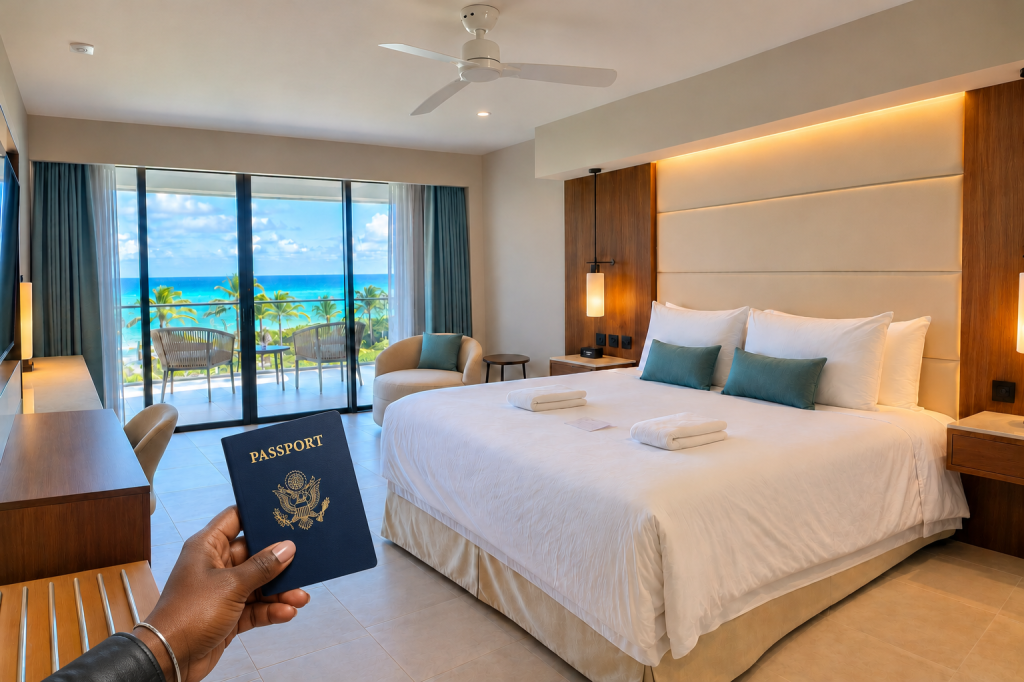
The room has a balcony. The pool looks good. You’ve already pictured yourself walking through the lobby with your sunglasses on. I get the appeal.
But before you book, take a few minutes to look past the gallery. Where is the hotel? What’s included in that price? And is the room you’re choosing even the one in the photo you keep going back to?
Here are twenty things worth checking while you still have time to choose. This is a general booking guide, so confirm the details with the hotel and whoever is taking your payment for your particular stay.
1. The price for the whole stay
That nightly rate looks cute until you multiply it by the nights and add everything else. Check the final total for your dates and guest count, including taxes and any required resort or destination fees. Then look at optional costs you’ll actually use. Compare full totals rather than the first number in the search results.
2. The deposit or hold at check-in
Paying for the room doesn’t necessarily mean you’re finished budgeting for arrival. Ask whether the hotel takes an incidental hold or deposit, how much it is, which cards it accepts, and how release works. The hotel and your bank may have different processing timelines, so don’t assume the money will be available again the second you leave.
3. The exact cancellation deadline
“Free cancellation” needs a date and a time next to it. Read the deadline, the time zone, and what happens afterward. Save the terms attached to your actual booking. If you’re booking through another company, check who you must contact to cancel and keep the cancellation confirmation.
4. When the payment is due
A reservation can be prepaid, partly paid, or payable later. Find out when the money will be collected, whether the rate is refundable, and what happens if the card payment fails. A cheaper nonrefundable rate might suit a firm plan, but decide whether the saving is worth the risk if your plans change.
5. The location beyond the pretty lobby
Open the map. Look at where you want to spend your days, then check realistic travel times, transport options, and the surrounding streets. A cheaper room can become an expensive choice if every outing needs a long ride. And “near the beach” deserves a closer look. Near on a map and easy to reach with your beach bag aren’t always the same thing.
6. Getting there from the airport
Ask what an airport transfer costs, whether it’s shared or private, and how you arrange it. Confirm which airport the service covers and the operating hours. If you arrive late, find out where you’ll meet the driver and what happens if your flight is delayed. Don’t assume a shuttle is included because there’s a photo of a van.
7. The newest reviews
Sort by recent and look for repeated details. One bad night won’t explain every stay, but several recent guests mentioning the same issue are worth noticing. Read what people liked too. You’re trying to work out whether the hotel suits your trip, rather than find a place that has never received a complaint.
8. Guest photos of the room you want
Professional photos show a room at its best. Guest photos can give you another angle on the space, lighting, storage, and bathroom. Check the dates and room labels where available. A gorgeous suite photo doesn’t tell you much about the standard room you’ve selected.
9. The room category attached to that price
Hotels can have different buildings, renovated rooms, older rooms, and several room categories. Match the listing description to your selection before paying. If there’s a feature you care about, ask whether it’s included in that category or just shown elsewhere in the gallery.
10. What the view description means
Oceanfront, ocean view, and partial ocean view can describe very different setups. Ask what the hotel means by the category you’re buying. If you’re paying extra for a balcony, check that it’s a private balcony you can use. You don’t want to spend the week leaning around a wall trying to locate your upgrade.
11. Beds, guests, and connecting rooms
Check the bed configuration, maximum occupancy, and any charges for extra guests or rollaway beds. If you need connecting rooms, find out whether they’re confirmed or only requested. Two rooms on the same booking don’t automatically mean a connecting door, and a request isn’t the same as a guarantee.
12. Breakfast, including the hours
Breakfast included sounds great. Ask where it’s served, who on your booking is covered, and whether it’s a buffet, a set menu, or a credit with a limit. Then check the hours. If you’re leaving for an early tour every morning, that inclusion may not be as useful as it first looks.
13. What all-inclusive actually covers
Read the inclusions for your package and room category. Ask about restaurants, drinks, room service, minibar items, activities, and anything you’re especially looking forward to. Premium options or particular experiences may cost extra. You want to know which parts you can enjoy without signing another bill.
14. Restaurant reservations and dress codes
If dinner at a particular restaurant matters to you, check how reservations work and when they open. Ask about included visits, operating nights, age restrictions, and the dress code. A little planning here can save you packing the wrong shoes or assuming you can walk into every restaurant whenever you feel hungry.
15. Pool, beach, and rooftop access
Find out which spaces your room rate includes. Ask whether there are separate sections, day passes, reservations, or extra charges for loungers and cabanas. Check the actual opening times too. That rooftop might be the reason you’re booking, so make sure you’ll be able to use it.
16. The hotel’s idea of a good night
A lively resort and a quiet retreat can both be great, depending on what you want. Read about evening entertainment, nearby nightlife, and whether rooms face a busy road or event space. If you’re a light sleeper, ask about a quieter location. A request may help, but don’t treat it as a promise.
17. Renovations during your dates
Ask whether construction is planned and which areas it affects. It could be a closed pool, work in another building, or noise near the room you’re considering. Get current information rather than relying on an older review that says everything is finished. Check whether the facilities you’re paying for will be open.
18. The features you personally need
If you need step-free access, a specific bathroom layout, reliable Wi-Fi for work, a refrigerator, or another essential feature, ask detailed questions before paying. “Accessible” or “business-friendly” alone may not answer them. Request written confirmation of the specific setup and whether the room feature is guaranteed.
19. Arrival time and the check-in rules
Check the minimum check-in age, required identification, payment-card requirements, and reception hours. If you’ll arrive after midnight, tell the hotel and confirm how to keep the room. Early arrival is worth discussing too: ask about luggage storage, changing facilities, and whether you can use the property before your room is ready.
20. Who has your booking and how to reach them
Before paying, confirm whether you’re dealing with the hotel or an intermediary, and read the seller’s terms. Verify contact details independently if a message or payment request seems off. Save your confirmation, room category, included benefits, payment receipts, and cancellation terms somewhere you can find them while traveling.
A message you can send before booking
If the listing leaves you with questions, try this:
“Hi! I’m considering booking [room category] for [dates] for [number of guests]. Could you confirm the full stay total, any check-in deposit or hold, the cancellation deadline, and whether [feature that matters to you] is included? Are there any closures or renovations planned during those dates? Thank you!”
Keep the answer with your booking details. If you’re comparing two rates, ask the same questions about each so you know what the difference actually buys.
Before you close the booking tab
Check the dates one more time, including the year, guest names, guest count, and room type. Make sure you understand the amount due now and anything payable at the property. Then save the confirmation somewhere you can open without hunting through fifteen emails at the airport.
The FTC’s travel-shopping guidance also recommends getting cancellation terms before paying, checking the business, and knowing whether you’re buying from the hotel or a booking company.
A pretty room can still be a good choice. You just want the room, price, and experience you’re actually agreeing to. Once those details make sense, you can get back to the fun part: deciding what you’re packing.
What’s the first thing you check before booking: the bathroom, location, food, reviews, or whether that balcony is really yours? And what’s something you wish you’d checked on a past trip?
#HotelBookingTips #TravelPlanning #HotelChecklist #TravelTips #LittleInBetween


Leave a Reply