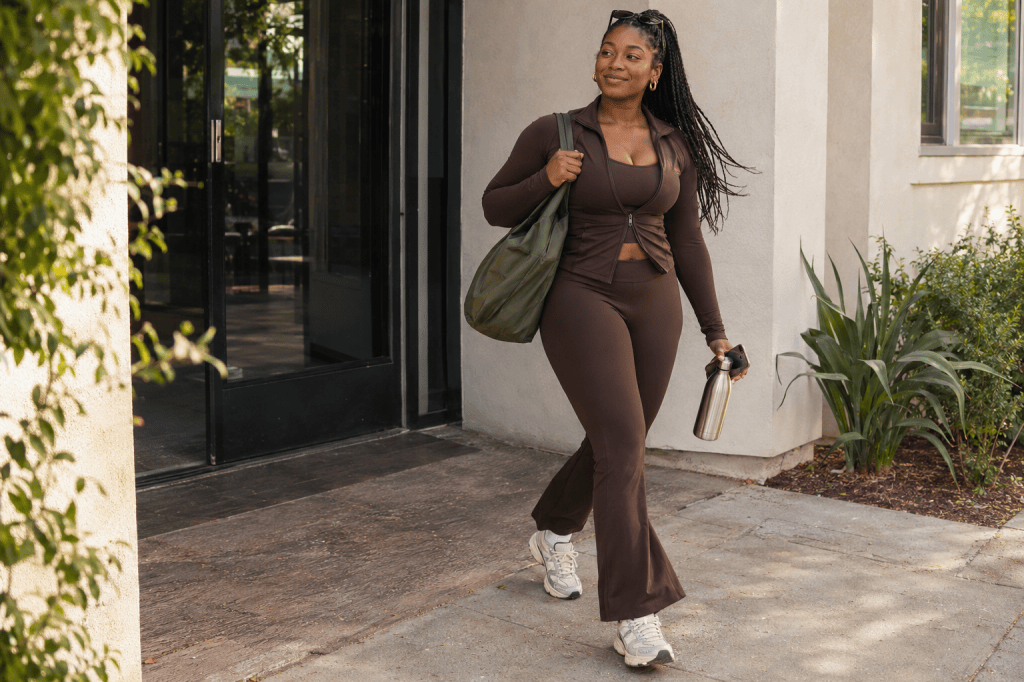
The gym bag is still in the closet. Your saved workouts are still saved. And somehow, getting back into exercise has become a bigger project than the workout itself.
If you’re wondering how to start working out again after a break, begin with a week you can actually manage. You do not need to catch up on missed workouts or earn your way back with an exhausting session. You need a starting point that fits your life today.
Start with your current energy, not your old routine
Maybe you used to lift several days a week. Maybe walking was your thing until work, parenting, stress, or a change in schedule took over. Before choosing a workout, ask yourself: How much time do I really have? What movement feels approachable? What made my old routine hard to keep?
Choose a smaller version of the habit that slipped away. A ten-minute walk counts as a planned session. So does a short strength workout at home. Keep the first few sessions easier than your memory of what you used to do.
If your break involved an injury, surgery, pregnancy, a recent illness, or symptoms that affect exercise, ask your healthcare professional what a suitable return looks like for you.
A gentle first-week workout plan after a break
Use this as a flexible example, not a test. Move the days around, shorten a session, or repeat an easier day when you need to. Choose a walking pace where you can still talk comfortably.
Day 1: Take a ten-minute walk. Start slowly and finish slowly. Notice how you feel afterward and the next morning.
Day 2: Rest or move gently. A few comfortable shoulder circles, ankle circles, or an easy stroll can be enough. Skip stretches that hurt.
Day 3: Try a short strength session. After a few minutes of easy marching or walking, try five controlled chair sit-to-stands, five wall push-ups, and five supported calf raises. Use a sturdy chair placed against a wall. Rest as needed. One round is plenty to begin with; add a second only if the movements feel comfortable and controlled.
Day 4: Take a recovery day. You do not have to add a workout to make the week count.
Day 5: Walk for ten to fifteen minutes. Repeat ten minutes if that feels right. Add time only if your earlier session felt manageable.
Day 6: Choose what you would like to repeat. Another easy walk or the short strength session is enough. If you are still unusually tired or sore, rest instead.
Day 7: Check in and plan two sessions for next week. Keep what worked. Adjust what did not. There is no requirement to increase the difficulty every week.
Stop if you feel sharp pain, dizziness, or unwell. Seek urgent medical help for chest pain, fainting, or severe or unusual breathlessness. A comeback workout should not require pushing through warning signs.
Make getting started easier before motivation disappears
Pick a specific cue: after dropping the kids off, before your evening shower, or during a lunch break. Then prepare one small thing ahead of time. Put your shoes near the door. Charge your headphones. Leave your workout clothes where you can see them.
If packing is the part that slows you down, use the beginner gym bag checklist. You do not need to buy a new set of everything before you can begin.
Set two versions of your plan. Your regular version might be a fifteen-minute walk. Your busy-day version might be five minutes outside. Decide both in advance so a busy day does not turn into a week of waiting for the perfect moment.
Track progress beyond the scale
For your first few weeks, record things you can actually use: which days you moved, how long you moved, how the effort felt, and whether the plan fit your schedule. You might notice that getting out the door takes less convincing, a familiar walk feels easier, or you finish a session with energy left.
Those observations can help you decide what to repeat. Body weight can fluctuate, and it does not tell the whole story of your fitness or your consistency.
What if you miss a workout?
Return at the next realistic opportunity. You do not need a double session, a punishment workout, or a stricter food plan to make up for it.
If you keep missing the same session, treat that as information. A morning workout may not suit your current schedule. A gym commute may be taking more time than the exercise. Change the plan before you decide that you are bad at consistency.
When you feel ready for a longer session, save the 20-minute workout for days you almost skip. For lunch inspiration alongside your routine, try these protein-rich lunch ideas.
Find support for the routine you’re building
I created Pretty Fit Club as a place to work toward fitness goals, track progress, and connect with a support group. If having somewhere to check in helps you keep showing up, come take a look.
Your first week back does not need to look impressive. It needs to give you a starting point you are willing to return to.
What feels realistic for you this week: a walk, a home workout, or a trip back to the gym? Tell me in the comments.
Image created with AI for Little In Between.
Sharing your fresh start? #BeginnerFitness #WorkoutRoutine #HealthyHabits #WalkingForFitness #PrettyFitClub


Leave a Reply