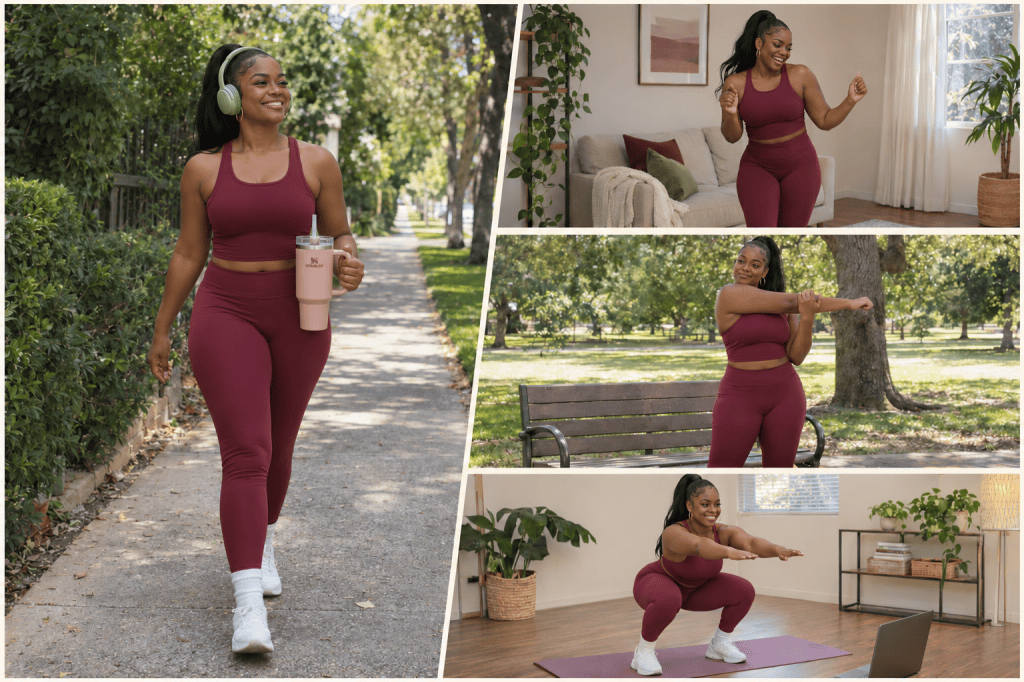
The gym can be a great place to work out. It can also involve a commute, a monthly payment, and that one machine you keep walking past because you are still not entirely sure how it works.
And sometimes, girl, you just want to move without making a whole outing of it.
If you are looking for ways to exercise without going to the gym, you have options. Walking, dancing, beginner home workouts, and recreational activities can all have a place in a routine. You do not need to become a gym person before you get to start.
Here are fifteen ideas to choose from, with realistic time ranges and ways to make them smaller. Pick what sounds enjoyable and fits your current ability. There is no requirement to complete the list.
First, what actually counts as movement?
The CDC recommends ↗ at least 150 minutes of moderate-intensity aerobic activity a week for adults, plus muscle-strengthening activity on at least two days. You can build toward that gradually and split activity into smaller sessions.
Not every activity below provides the same benefit. Gentle stretching is different from brisk walking, and a relaxed stroll is different from strength training. A mix can help you build a routine that includes different kinds of movement.
For moderate aerobic effort, the CDC’s talk test ↗ is a useful guide: you can talk, but singing would be difficult. Your pace will be personal. Start where you are, not where somebody else’s video says you should be.
1. Make a three-song playlist your workout
8 to 12 minutes · No equipment
Choose three songs you cannot sit still through and dance in a clear space. Nobody needs to witness your choreography. Keep your steps small or dance seated if that suits you. Start with one song, and let that be enough.
2. Take a neighborhood photo walk
10 to 20 minutes · Phone optional
Pick a familiar, accessible route and look for three things worth noticing: a mural, an interesting doorway, or somebody’s impressive plant collection. Stop somewhere safe before taking photos. Shorten the route or choose an accessible roll if walking is not your option.
3. Try a walking video indoors
5 to 20 minutes · Clear floor space
A beginner walking video can give you some structure without a commute. Preview the movements, choose a comfortable pace, and skip turns or steps that do not suit you. Start with five minutes rather than committing to the whole video.
4. Make the catch-up a walk-and-talk
10 to 30 minutes · A friend or your phone
Invite someone for an easy neighborhood loop, or take a call on a safe, quiet route. The point is company and movement, not matching somebody else’s pace. Choose a short out-and-back route so stopping early is simple, and stay aware of your surroundings.
5. Follow a beginner dance lesson
10 to 20 minutes · A screen and clear space
Learn a little line dance or a few simple steps from a beginner lesson. You are allowed to rewind. You are also allowed to be off beat. Choose a no-jumping option and practice the footwork slowly before adding bigger movements.
6. Build a small strength routine at home
5 to 15 minutes · Sturdy chair and wall
Try a few controlled sit-to-stands from a stable chair and wall push-ups, if those movements suit you. Use support, work within a comfortable range, and rest between exercises. Start with a few repetitions. These are starting moves, not a complete strength program.
7. Choose a short mobility break
3 to 8 minutes · No equipment
Try comfortable shoulder movements, ankle circles, or a gentle stretch you already know how to do. Move slowly and avoid forcing a position. This can be a seated break too. Mobility work adds variety, but gentle stretching does not replace aerobic activity or strength training.
8. Go window-shopping with a route
15 to 30 minutes · Comfortable shoes
Choose a walkable shopping area or indoor mall and make a loop. Looking is free; the bag is optional. Check access, opening hours, and somewhere to rest. A shorter loop works, and no one needs to buy a new outfit to justify the trip.
9. Try a beginner pool session
10 to 30 minutes · Pool access and swimwear
If a supervised pool is available, consider a beginner water-movement class or comfortable water walking in an appropriate area. Check the facility’s rules and speak with staff about your ability. Choose shallow-water instruction if appropriate, and never swim alone.
10. Take a relaxed bike ride
10 to 20 minutes · Bike and helmet
Choose a protected, low-traffic route you know and check your bike first. Start short and flat rather than choosing the scenic hill that turns into a personal disagreement. An accessible cycle or a stationary bike may be a better option for some people.
11. Make a playground-style game the plan
10 to 20 minutes · Open space; a ball if wanted
Toss a soft ball, try an easy game of catch, or kick a ball around with a friend. No league application required. Pick level ground, leave enough room, and keep the pace comfortable. Seated catch can work when standing play does not.
12. Book a beginner class that sounds interesting
20 to 45 minutes · Depends on the class
Look at a community-center dance, gentle movement, or beginner fitness class. Ask about equipment, cost, access, and modifications before booking. A class is an option, not a requirement. If the price or atmosphere is wrong, choose a free activity instead.
13. Give gardening a small time slot
10 to 20 minutes · Suitable tools and plants
Water pots, tend a raised bed, or handle one manageable garden task. Keep loads light and take breaks. A seated planting setup can make the activity more accessible. You can enjoy movement outdoors without turning the whole yard into today’s assignment.
14. Try one active video-game session
10 to 20 minutes · Compatible game and equipment
If you already own a movement-based game, choose a beginner round and clear the area first. Use any required straps and follow the game’s safety instructions. Check for seated or lower-impact options, and stop if the screen makes you dizzy.
15. Make a short movement appointment with yourself
5 to 10 minutes · Whatever your chosen activity needs
Put a realistic break on your calendar and choose the activity in advance. It might be a hallway walk, a seated routine, or a favorite dance track. Start shorter than you think you should. The useful part is having something repeatable, not filling every spare minute.
A pick-three plan for your first week
Instead of scheduling a new activity every day, choose one familiar option, one at-home option, and one that sounds fun. Decide when each could fit, with room to change your mind if you need rest.
- A familiar option: a ten-minute walk or accessible roll on Tuesday.
- An at-home option: a short beginner strength routine on Thursday.
- A fun option: three songs of dancing or an easy game of catch on Saturday.
This is a starting experiment, not a complete weekly exercise prescription. Shorten it, repeat a favorite, or build gradually as your circumstances allow. Notice what you enjoyed enough to do again.
Let the gear be a bonus
A matching set, headphones, and a cute tumbler can be fun. They are not admission requirements. Use clothes you can move comfortably in, footwear suited to the activity, and the bottle you already have.
You do not need to shop your way into being allowed to start. Your first session can happen in the outfit that was clean.
Keep track with The Pretty Fit Club
Want somewhere to record what you actually did? The Pretty Fit Club ↗ brings workout logging, cardio check-ins, protein meals, water intake, and a supportive club space together.
It also has selected follow-along workout videos, with the trainers credited. Membership requires approval before you can use the club tools and group chats. Your personal fitness logs are not posted to the group.
Keep different activities honest in your tracker. A gentle stretch can be a good break without logging it as thirty minutes of cardio. You can appreciate a little movement for what it is.
Explore Pretty Fit and find your own rhythm ↗
The activity you enjoy is worth making room for
You can like the gym, dislike the gym, or go through seasons with it. None of those choices has to become your whole identity.
Try something that sounds good. Make it small enough to fit. Repeat what works. You are allowed to build a routine with a little less dread and a little more personality.
Which one sounds like your kind of movement: a playlist dance break, a walk-and-talk, or a beginner workout at home? Tell me in the comments.
General information for adults, not an individualized exercise plan. If an injury, health condition, pregnancy, or disability affects your activity choices, ask a qualified professional about suitable options. Stop if you feel pain, dizziness, or unwell.
#HomeWorkout #Walking #BeginnerFitness #HealthyHabits #PrettyFitClub
Collage created with AI for Little In Between. The accessories shown are styling details, not required equipment.


Leave a Reply